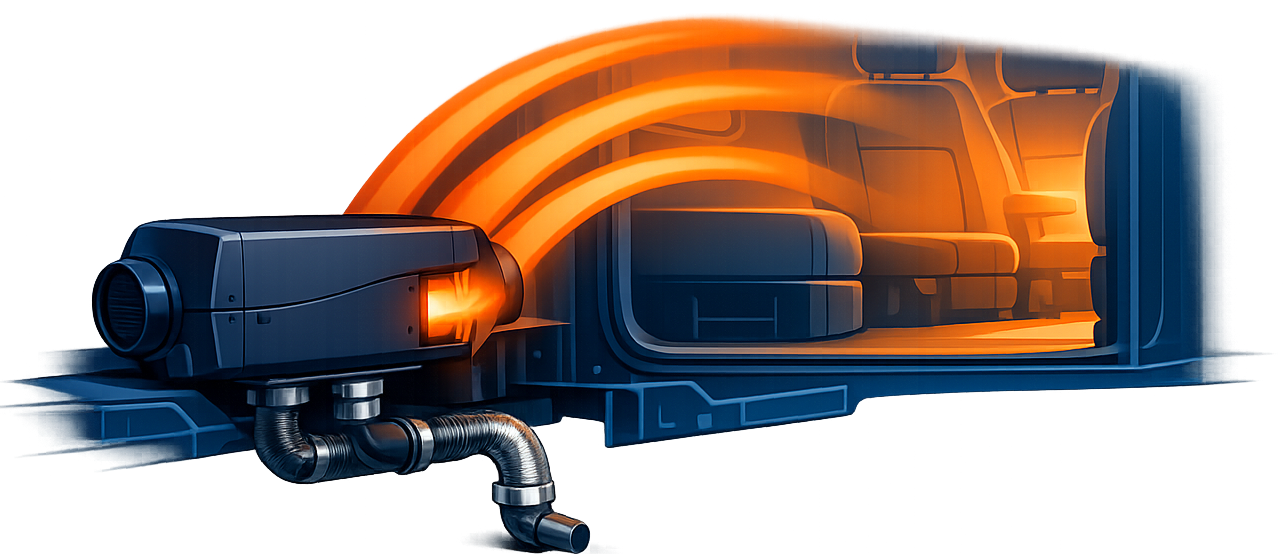
Why dry heat matters
Heating a van is not just about temperature. As covered in insulation & condensation, the enemy in a metal box is moisture. Any heater that burns fuel in the open air, a stovetop flame or an unvented propane heater, dumps water vapor straight into your living space, fogging the windows and feeding mold.
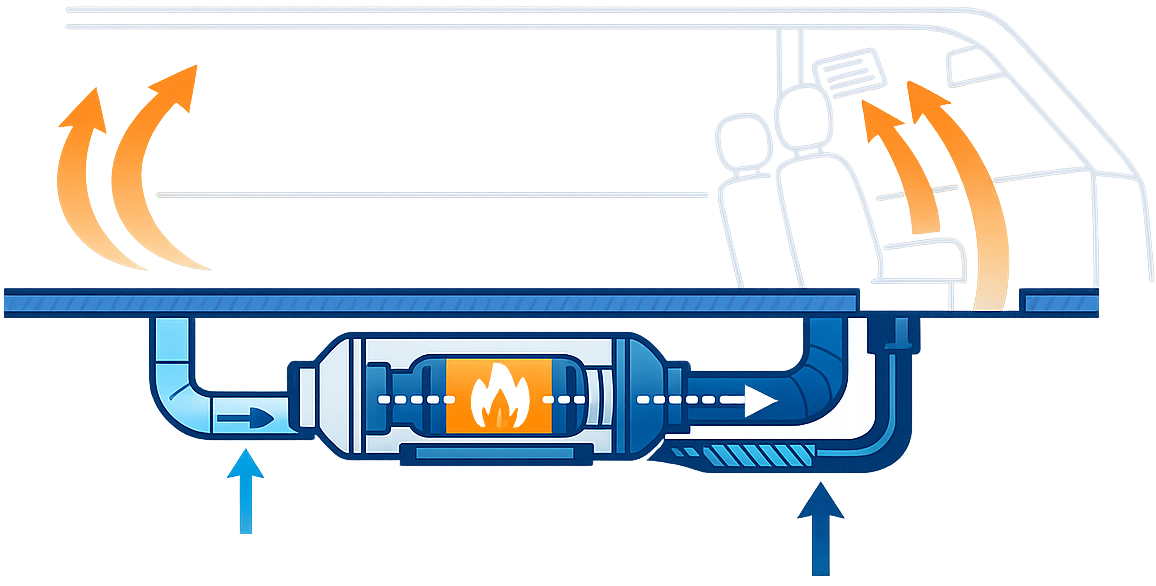
The fix is sealed combustion: a heater that burns fuel in a closed chamber and pushes the exhaust outside through a pipe, while circulating clean, dry cabin air separately. That is why diesel and gas air heaters are the standard for serious cold-weather builds.
A sealed, vented heater adds heat without adding humidity. An open flame adds both. For anything more than an occasional chill, choose sealed combustion.
Types of heater
- Diesel air heater. The most popular choice: efficient, dry, thermostatically controlled, and it can sip from the vehicle’s own diesel tank or a small dedicated tank. Sizes around 2kW to 5kW suit most vans.
- Gas (propane/LPG) air heater. Same sealed, vented principle, running on propane instead. A good option if you already carry propane for cooking.
- Portable propane (unvented). Cheap and simple, but it releases combustion moisture and carbon monoxide into the cabin. Occasional, well-ventilated use only, never while sleeping.
- Wood stove. Cozy and off-grid friendly in a larger van or bus, but bulky, needs clearances and a flue, and is hard to regulate.
- Electric. Clean and dry, but a resistive heater draws far more power than a van battery can sustain, so it is practical only on shore power.
- Hydronic / engine heat. Advanced systems that heat water and circulate it for both space and domestic hot water; excellent for full-time four-season rigs, at higher cost and complexity.
Sizing the heater
Heater output is rated in kilowatts (kW) or BTU. Bigger is not better: an oversized heater short-cycles, wastes fuel, and overshoots the temperature. Rough guidance:
- Most high-roof vans are well served by a 2kW diesel heater, which modulates down nicely for mild nights.
- Step up toward 4–5kW only for very large vans, buses, poor insulation, or genuinely severe cold.
- Good insulation, insulated window covers, and a tight build let a smaller heater keep up easily, so insulate first.
Altitude matters too: combustion heaters can need adjustment or a high-altitude mode above roughly 5,000–8,000 ft.
Installation & safety
These heaters are safe when installed correctly, and dangerous when not. The essentials:
- Vent exhaust fully outside, away from windows and vents, with a sealed, undamaged exhaust pipe.
- Seal the floor penetration so exhaust cannot enter the cabin.
- Feed clean intake air from outside, not from the living space.
- Mount the fuel line and pump per the maker’s instructions, protected from heat and road damage.
- Fit a carbon monoxide alarm (and keep a fresh battery in it). This is non-negotiable with any combustion appliance.
Carbon monoxide is invisible and deadly. Every van with any combustion heater or stove needs a working CO alarm mounted at sleeping height, and no unvented flame should ever run while you sleep.
Power & fuel use
An air heater burns fuel for heat, but its fan and glow plug still draw 12V power from your battery, most on start-up, less while running. It is a modest but real electrical load, so account for it in your power budget, especially for long, cold nights.
Fuel use is low: a 2kW diesel heater typically burns a fraction of a liter per hour on a low setting, so a small tank lasts many nights.
Run the heater on a low, steady setting with a thermostat rather than blasting it hot then off. Steady low output is quieter, uses less fuel, and avoids the sooting that comes from too much idling.
Beyond the heater
The heater is only half the comfort equation. To hold that warmth:
- Insulate well and cover the windows, your biggest heat leak, at night.
- Keep some ventilation even while heating, to clear the moisture you and cooking produce.
- Warm bedding does a lot of work, letting you run the heater lower or off overnight.
Common mistakes
- Oversizing the heater, leading to short-cycling and overshoot.
- Heating with an unvented flame and battling condensation all winter.
- Skipping the CO alarm, the one item you truly cannot omit.
- Poor exhaust routing that lets fumes back into the cabin.
- Forgetting the fan’s draw on the battery over a long cold night.
Quick checklist
- Choose a sealed, vented (dry) heater for real cold
- Size it to the van (about 2kW for most high-roof vans)
- Vent exhaust fully outside and seal the floor pass-through
- Install a carbon monoxide alarm at sleeping height
- Budget the fan’s 12V draw in your electrical plan
- Insulate and cover windows so a small heater can keep up