Mercedes-Benz Sprinter
Premium benchmark. Best for high-end builds, resale value, diesel/4x4 buyers, and polished adventure rigs.
Best for: premium adventure vansA practical buyer’s guide comparing cost, livability, drivability, conversion difficulty, off-grid potential, and long-term ownership risk, scored across eight categories.
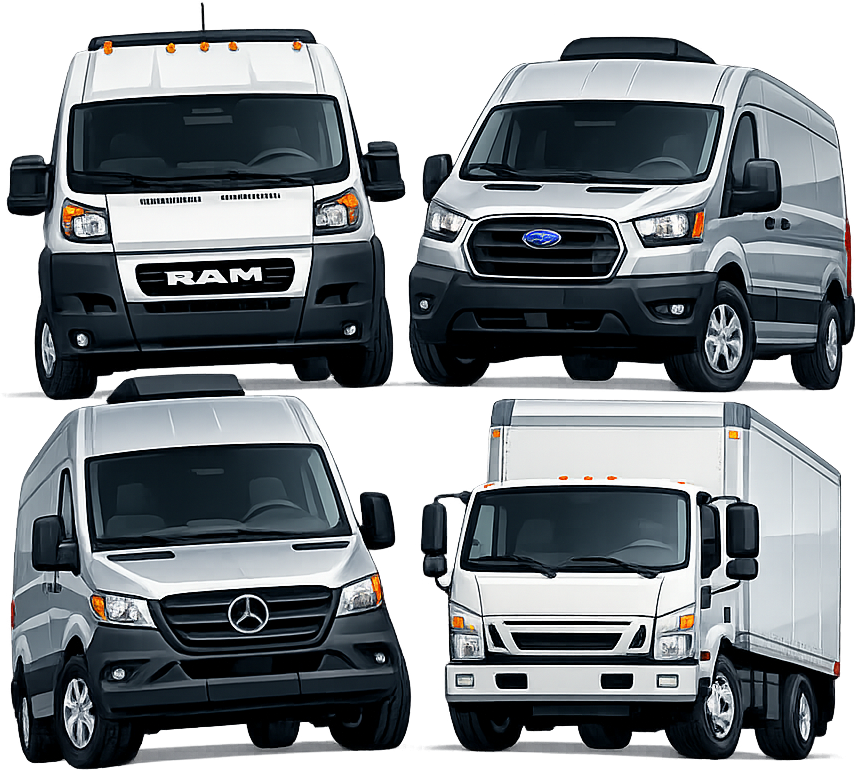
Our default pick for a typical two-person adventure build. There is no single best van, the right platform for you depends on budget, terrain, and how you travel. Find your match with the Build Planner →
Premium benchmark. Best for high-end builds, resale value, diesel/4x4 buyers, and polished adventure rigs.
Best for: premium adventure vansThe practical all-rounder. Excellent dealer network, strong drivability, available AWD, and broad build support.
Best for: balanced ownershipWide, square, affordable, and easy to build. FWD and flat floor make layout work simpler.
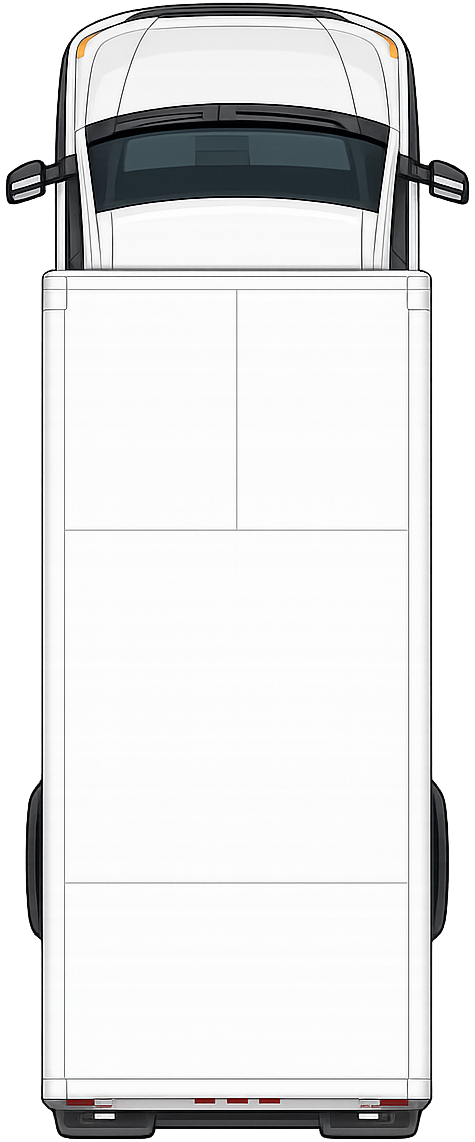
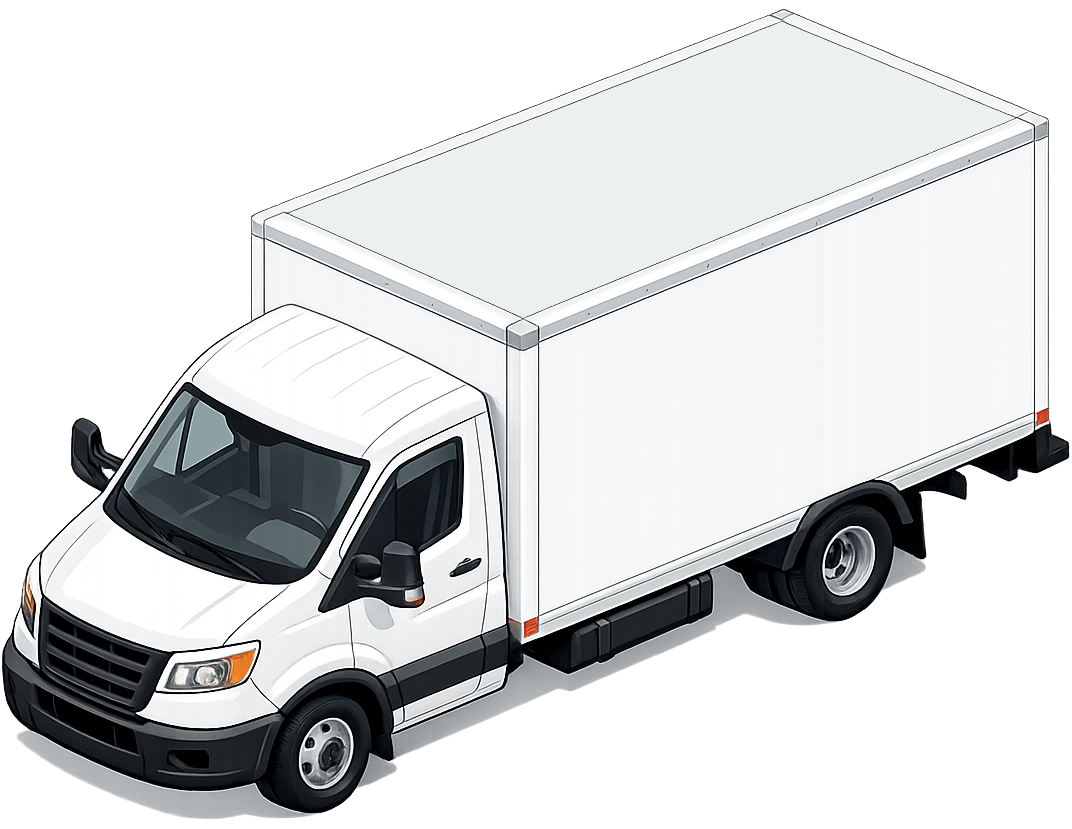
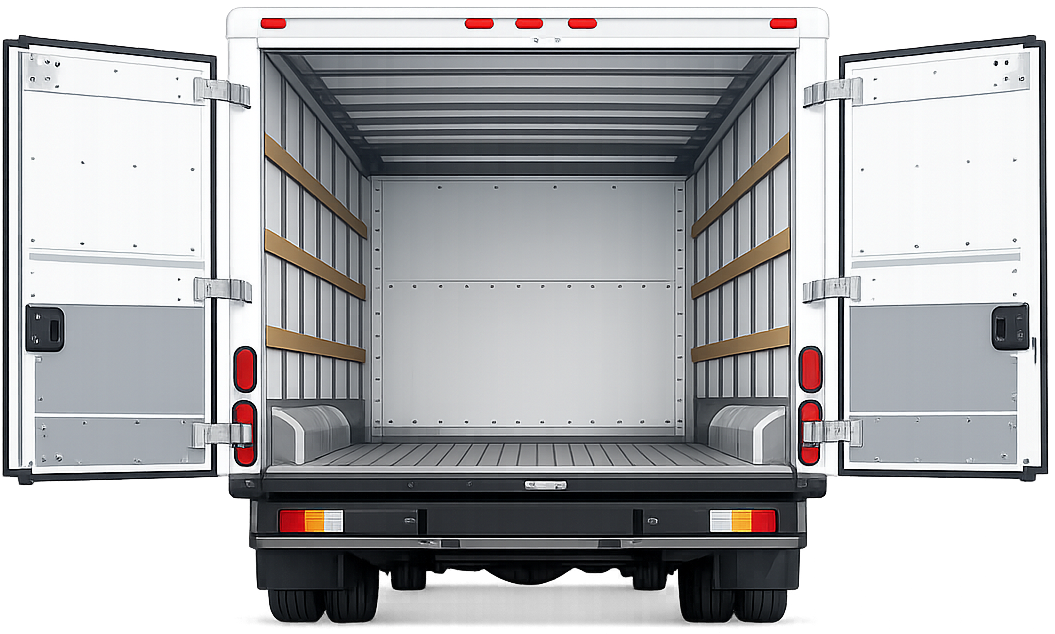
Best for: DIY value buildsMassive living volume and utility capacity, but much harder to park, drive, insure, and stealth camp.
Best for: tiny-home style buildsTap an image (or use the arrows, dots, or arrow keys) to rotate through view angles for each platform. More angles are added over time.


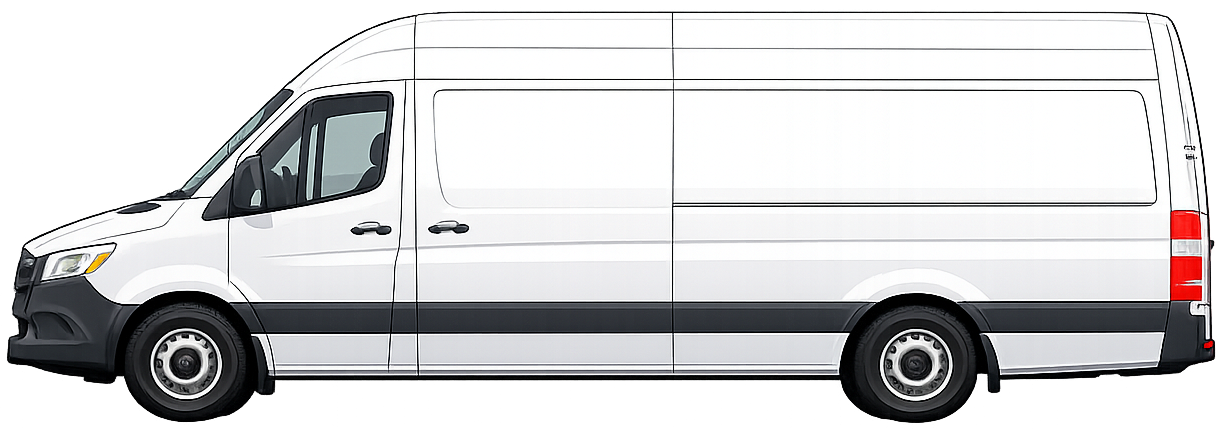
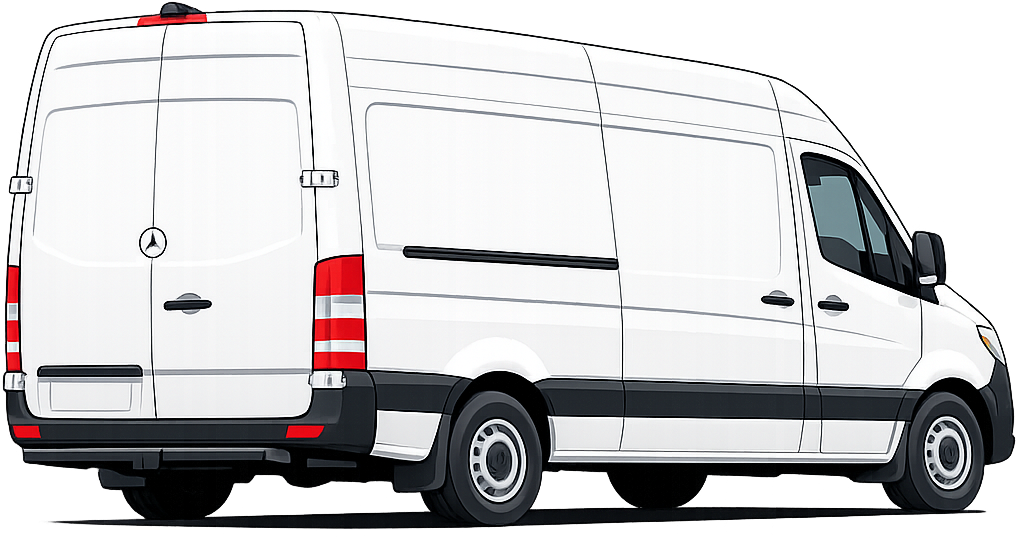
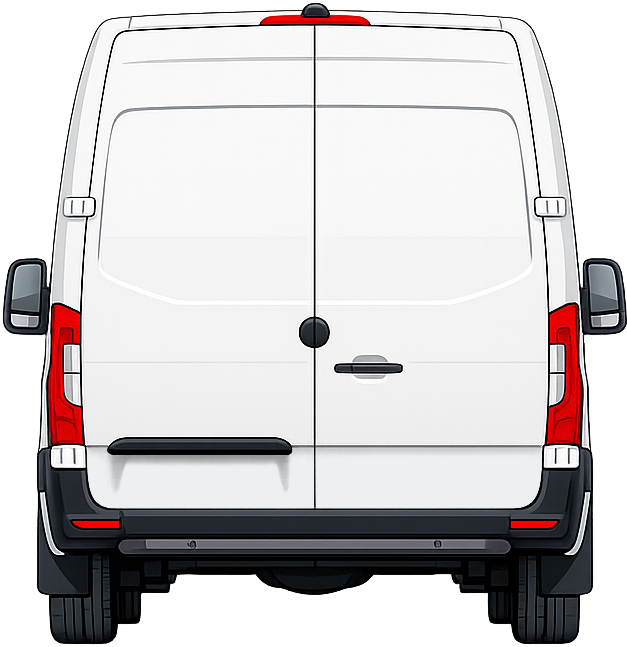
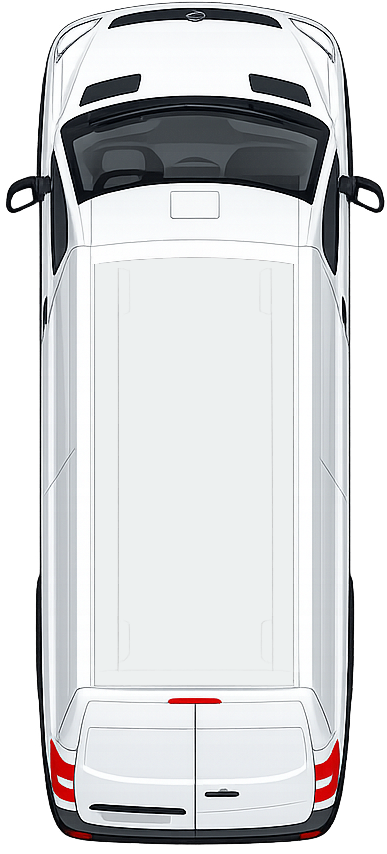
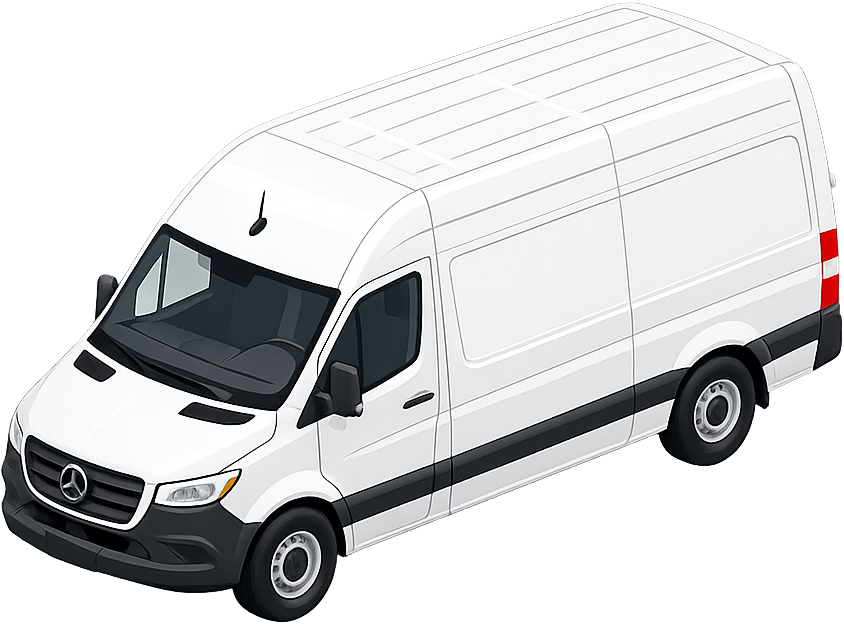
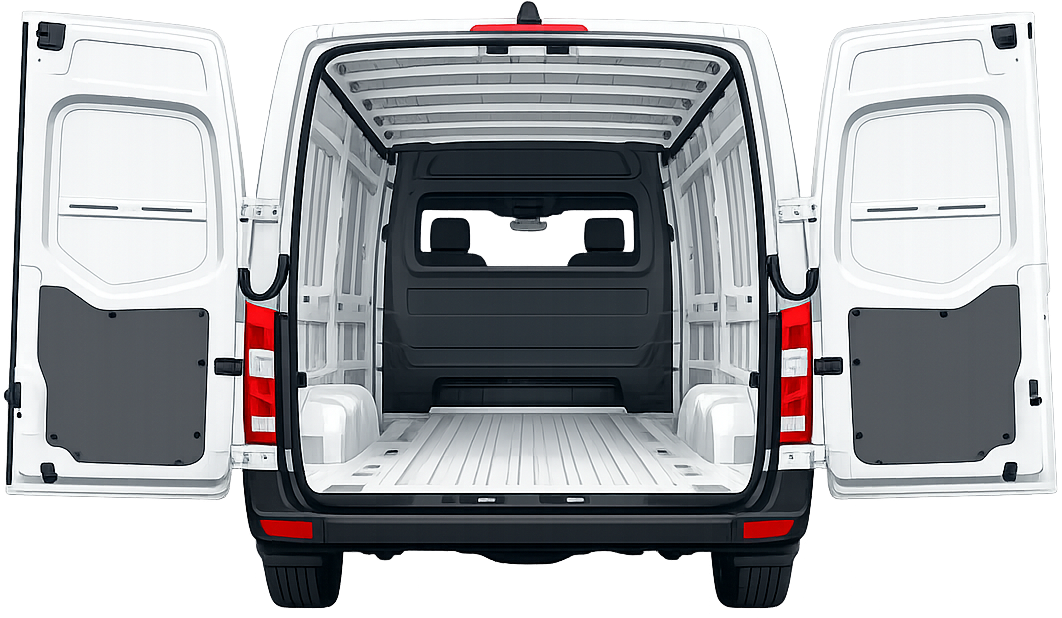
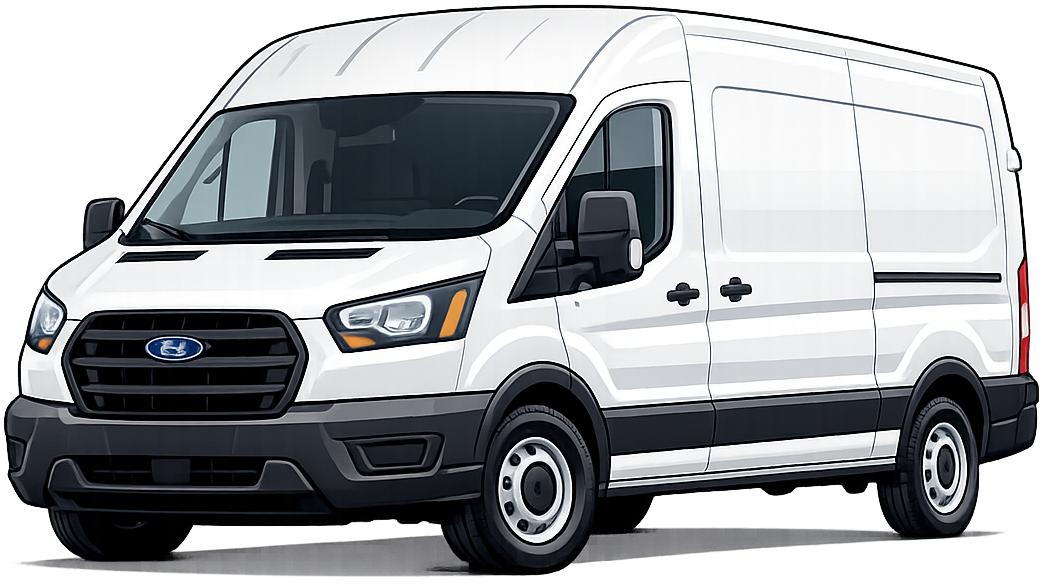
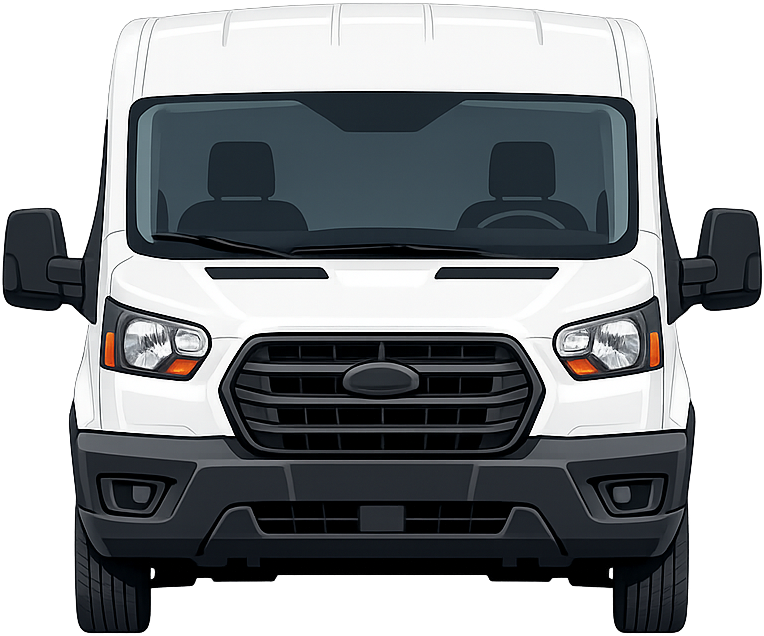
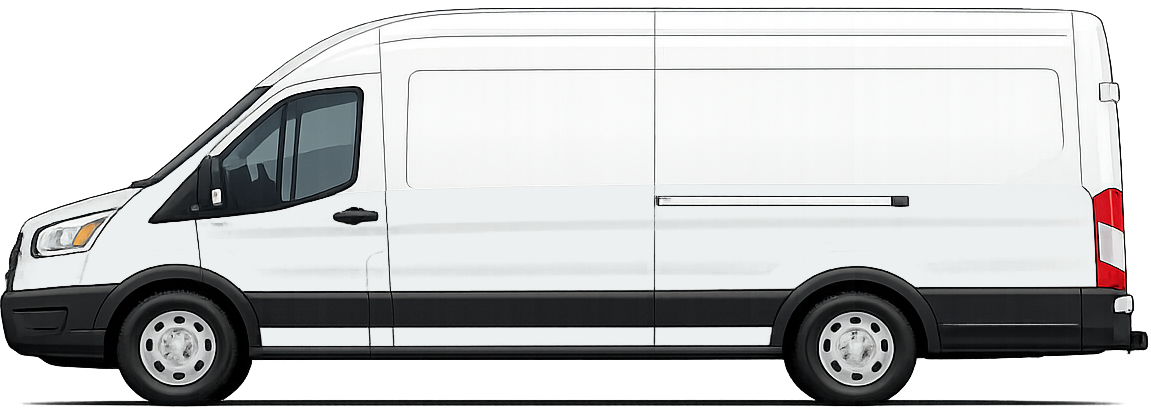
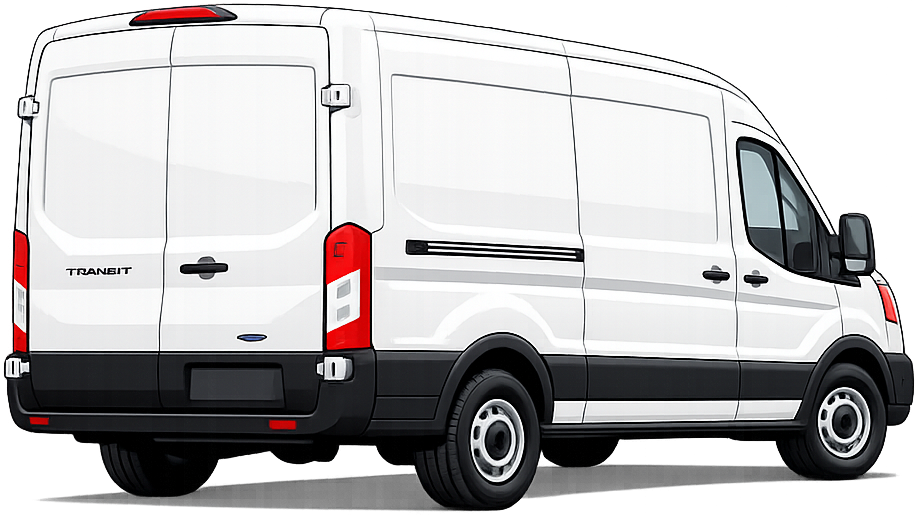
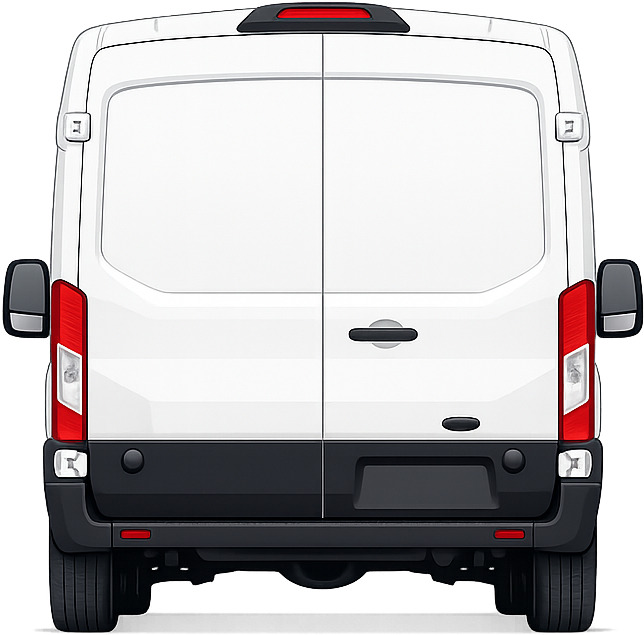
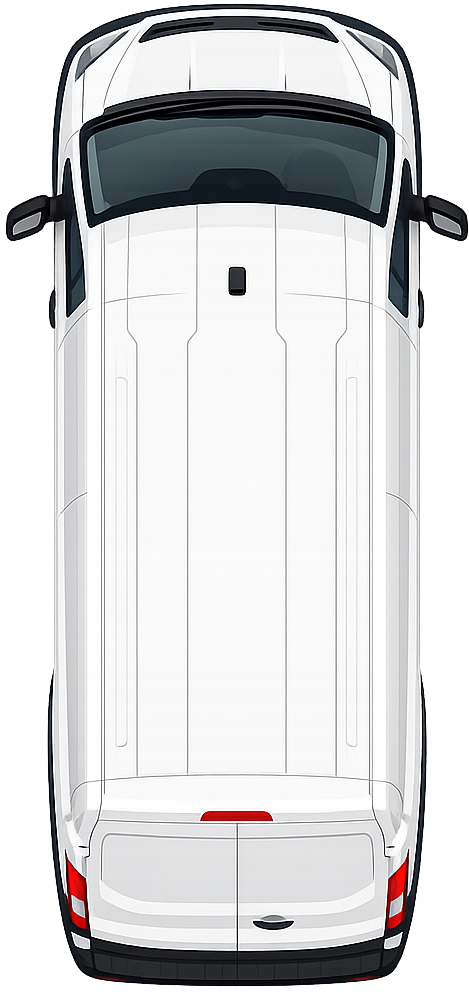
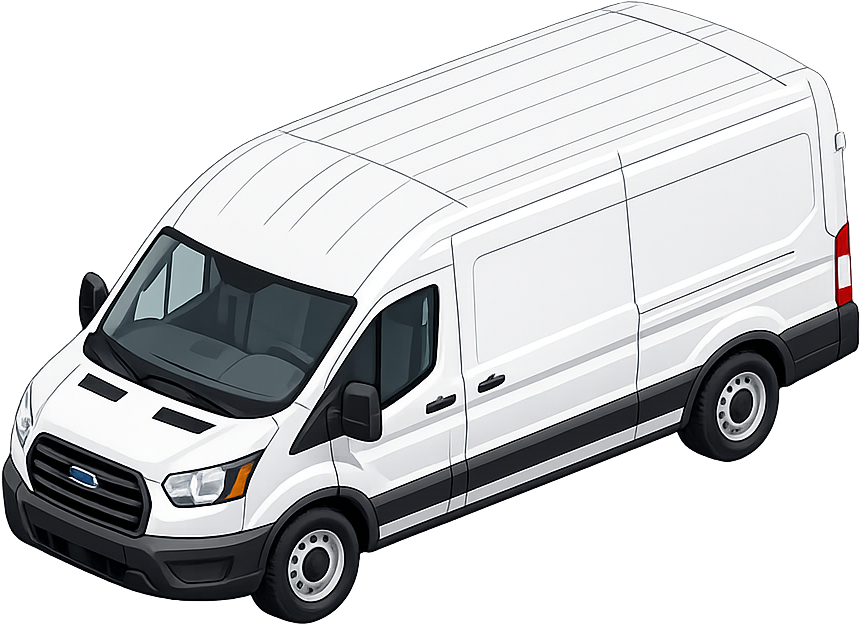
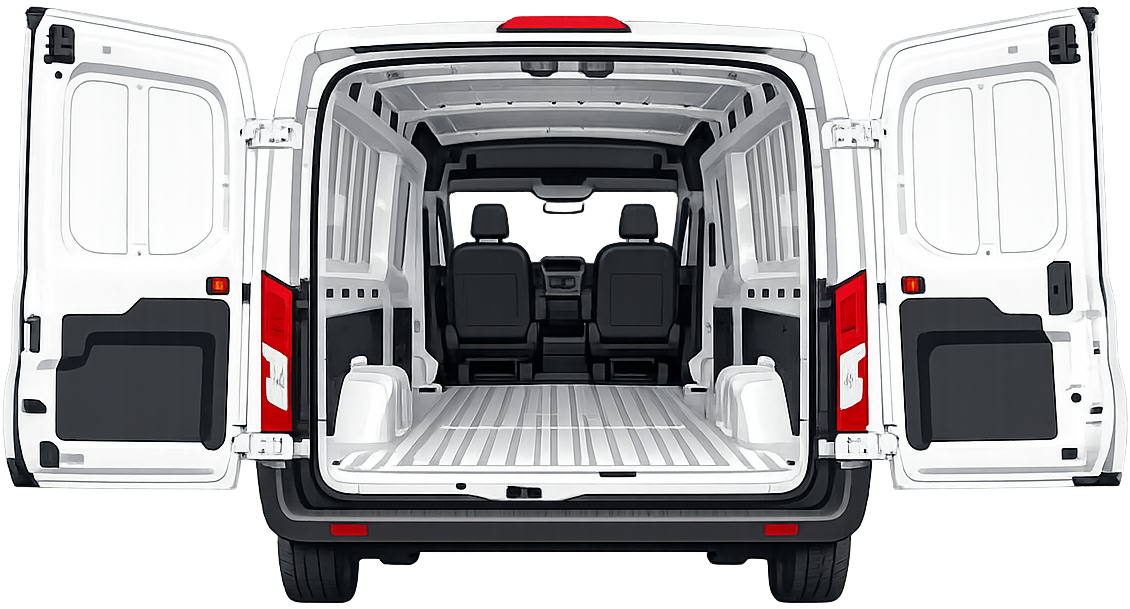
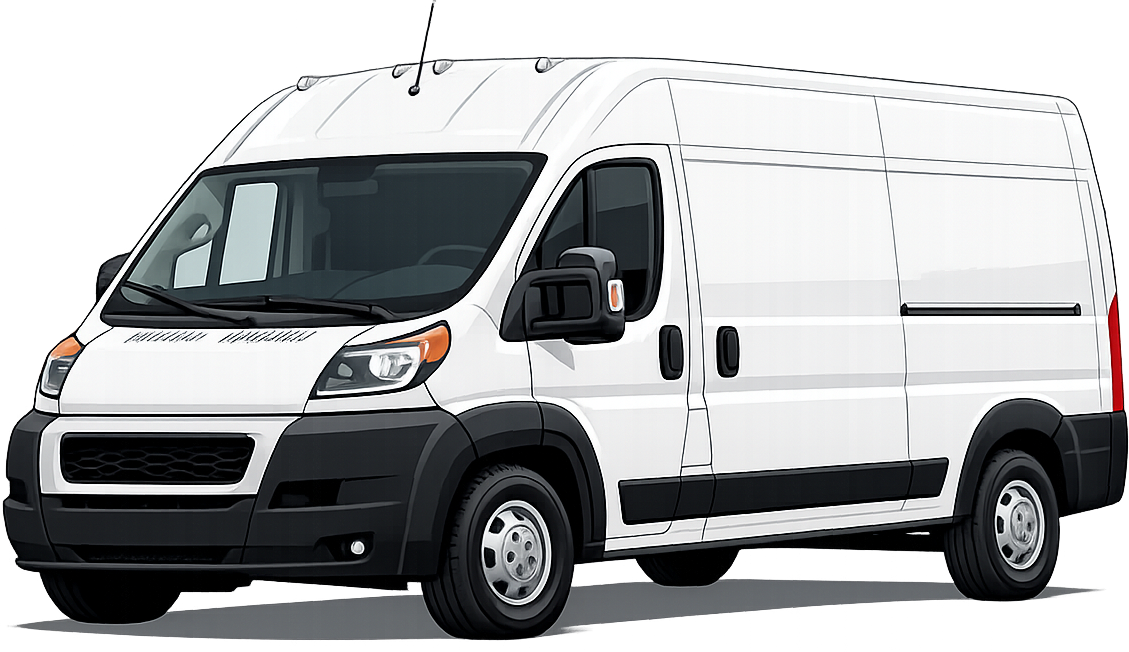
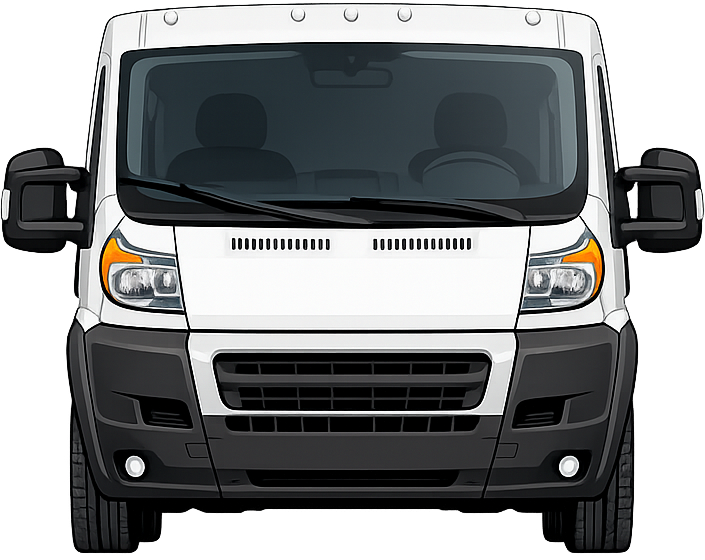
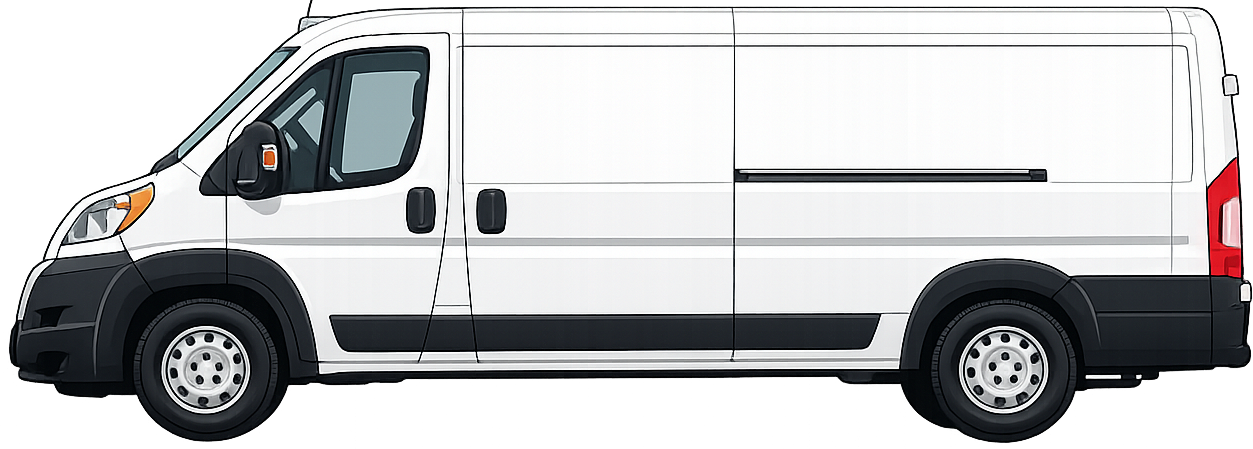
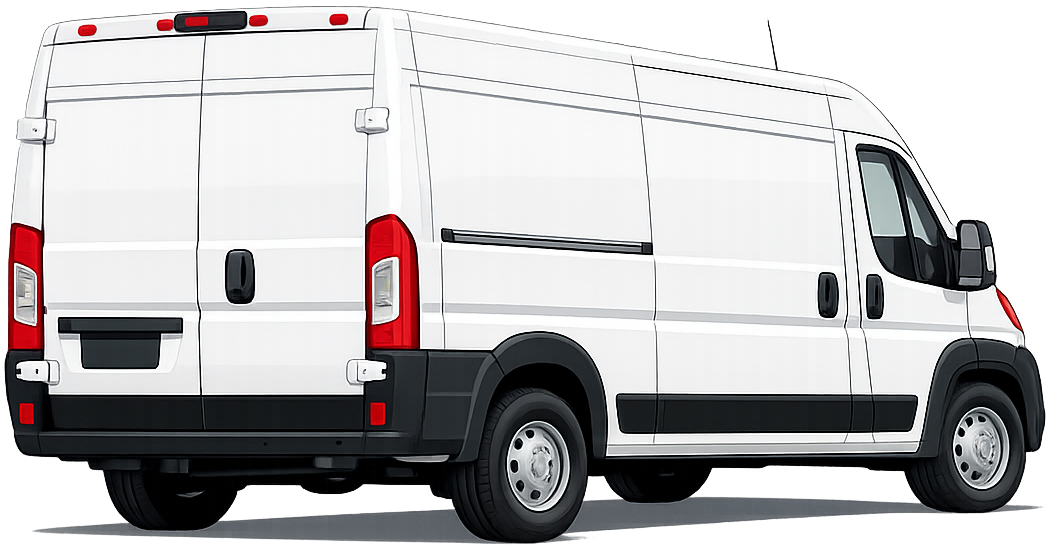
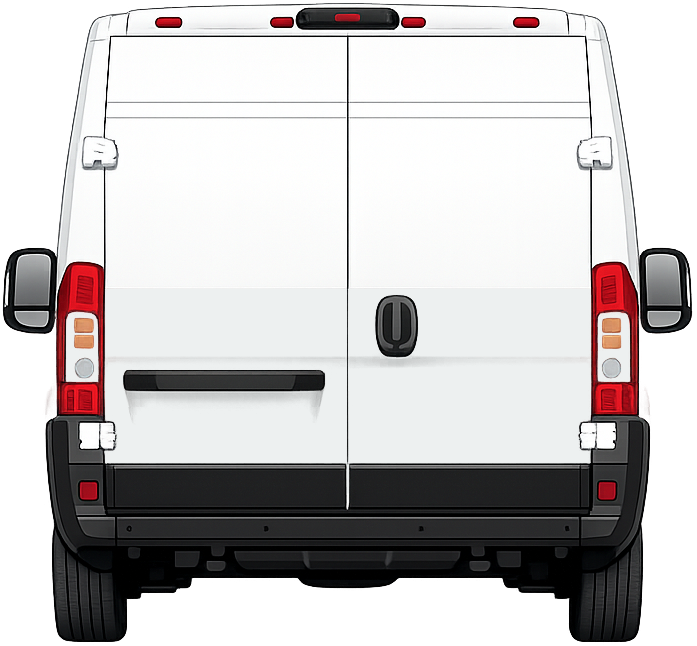
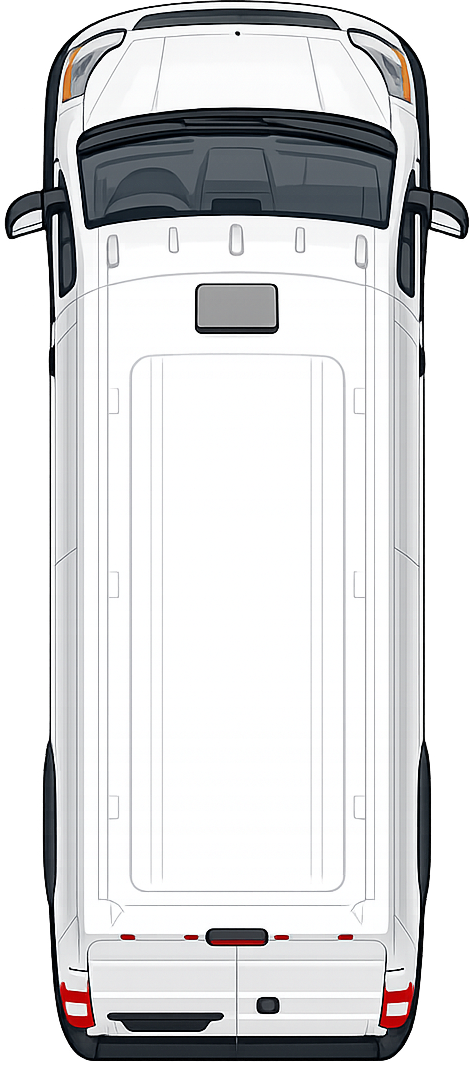
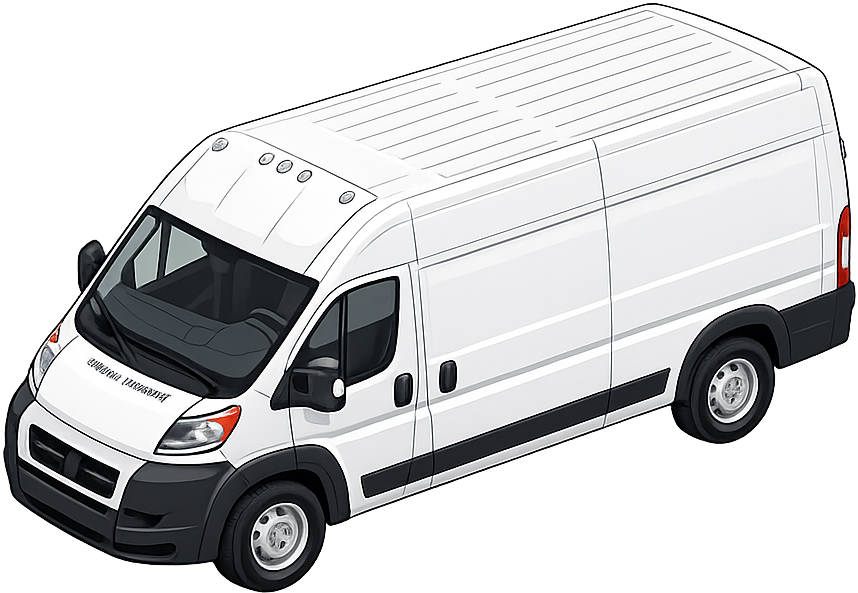
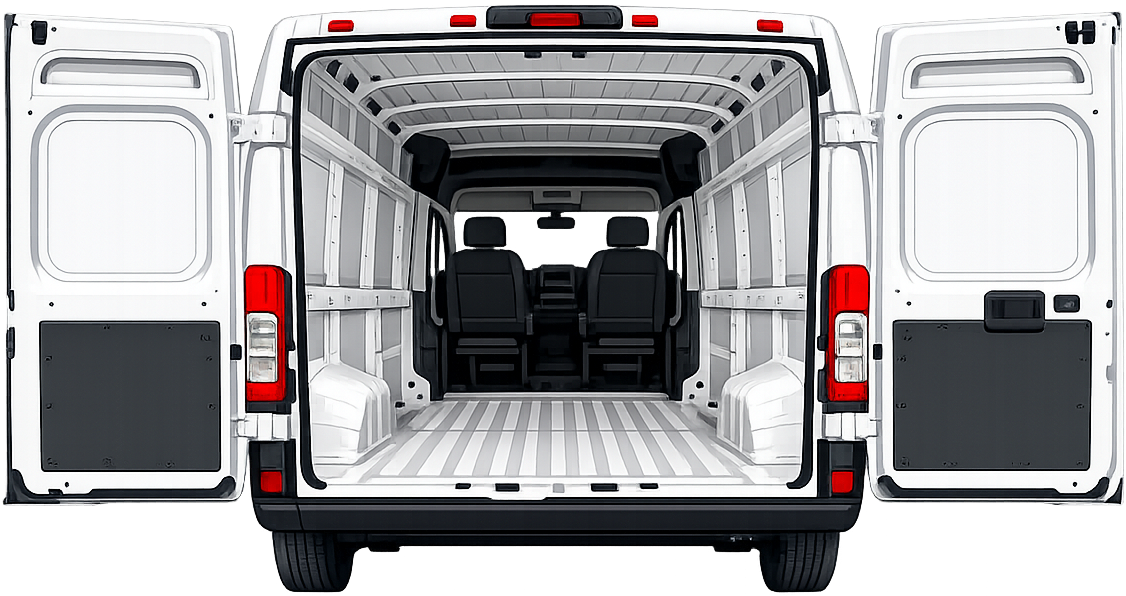
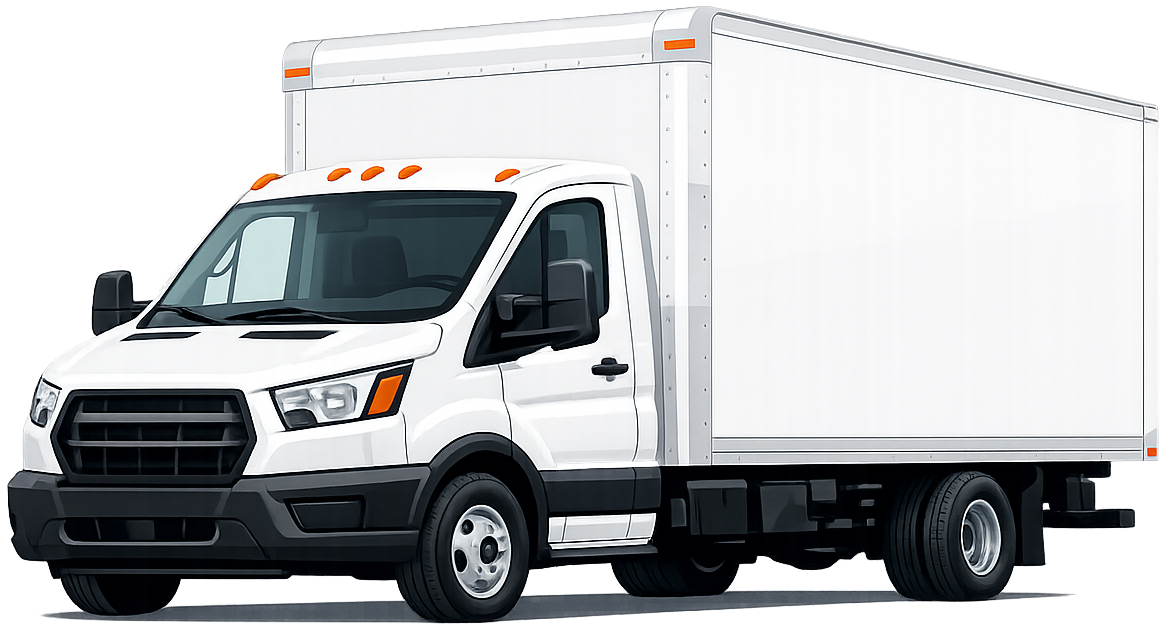
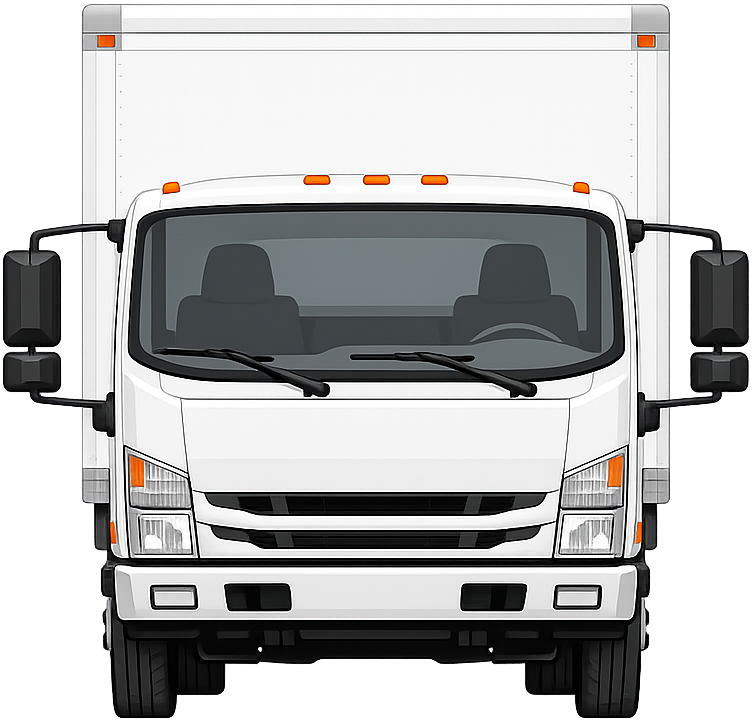
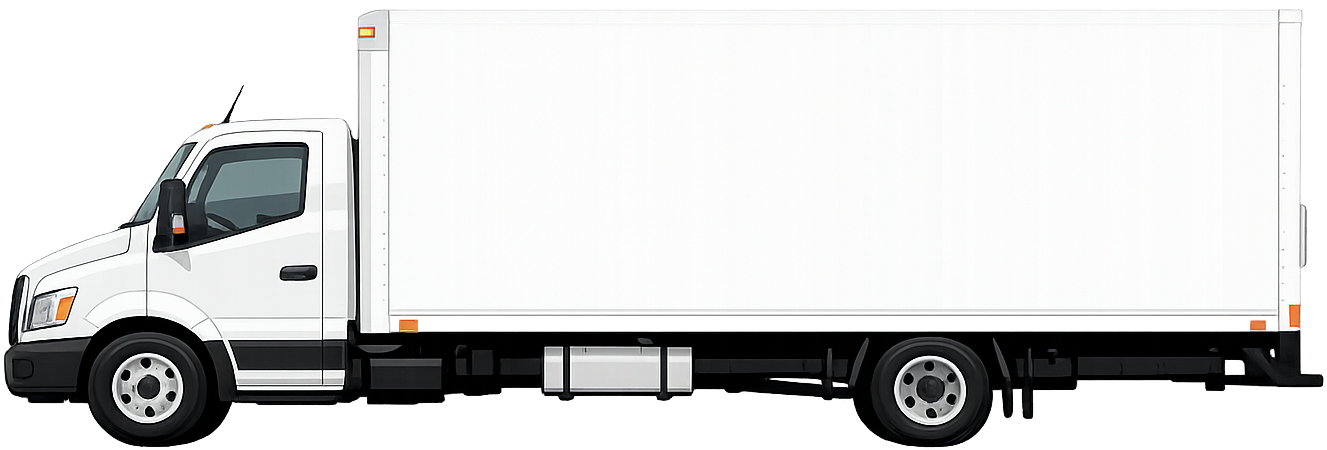
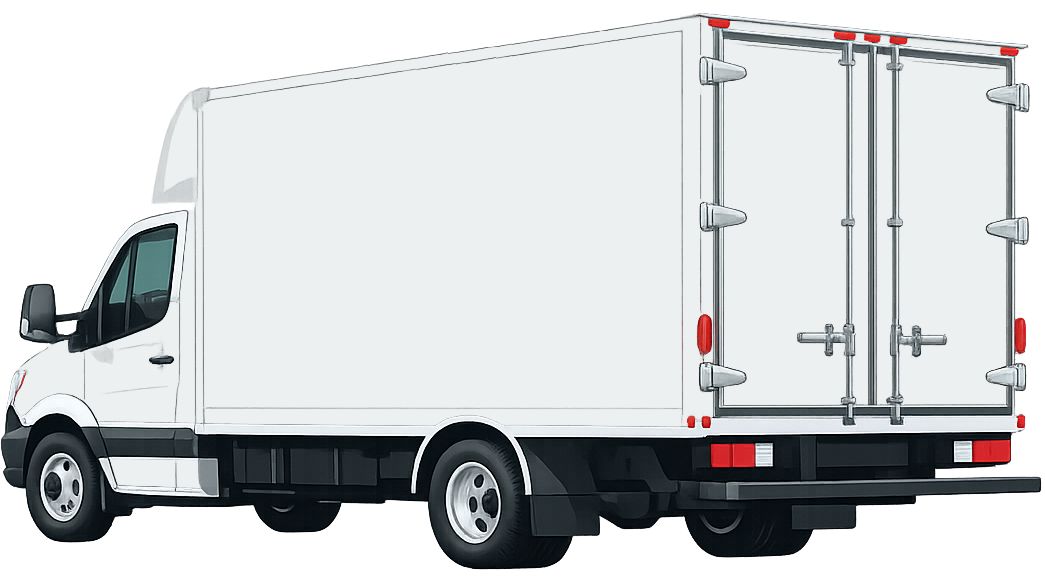
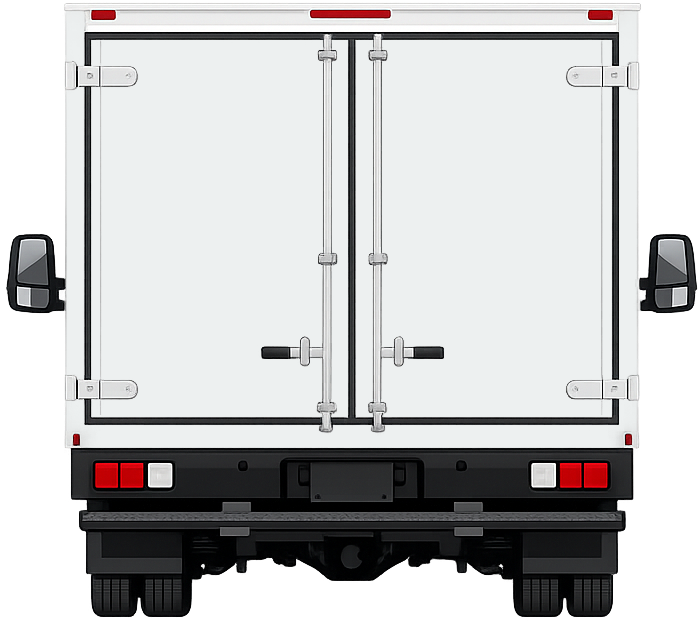
Eight categories, each with a detailed metrics table, a 1–10 scorecard, and an expandable full analysis. Each tab names the winner of that one category only, so different platforms win different dimensions: the ProMaster wins cost, the box truck wins space, the Sprinter wins fuel. The weighted overall score below uses a weighting tuned for a typical two-person adventure build, which the Ford Transit wins, but that is not a universal answer. A different priority (a tight budget, serious off-road, or full-time living) can crown a different platform, which is exactly what the Build Planner works out for your situation.
| Metric | Sprinter | Transit | ProMaster | Box Truck |
|---|---|---|---|---|
| New price (cargo) | $57k–95k+ | $48k–75k | $45k–65k | $65k–120k+ |
| Typical used (3–6 yr) | $25k–65k | $20k–55k | $18k–45k | $20k–75k |
| 5-yr depreciation | Low–Moderate | Moderate | Moderate–High | High |
| Est. annual insurance | $1,600–2,800 | $1,400–2,400 | $1,300–2,200 | $1,800–3,500 |
| Registration class | Passenger/commercial | Passenger/commercial | Passenger/commercial | Often commercial/DOT |
| Resale strength | Excellent | Excellent | Good | Moderate |
Category winner: ProMaster. Lowest entry and used pricing plus cheap parts make it the value leader. The Sprinter costs the most up front but claws value back through the strongest resale; the box truck’s low buy-in is offset by commercial insurance and registration.
Total cost of ownership is much more than sticker price. The ProMaster wins on the two numbers builders feel first: the lowest used prices and the cheapest parts. The Sprinter is the most expensive to buy and service, but its class-leading resale hands much of that back at sale time. The Transit sits in the sweet spot, affordable to buy and cheap to run.
The box truck can be bought cheaply as a used commercial vehicle, but commercial insurance, DOT registration in some states, and its fuel appetite quietly raise the real cost. Depreciation also matters if you plan to sell: Sprinters hold value best, while ProMasters and box trucks fall faster, which hurts sellers but helps used buyers.
| Metric | Sprinter | Transit | ProMaster | Box Truck |
|---|---|---|---|---|
| Max interior width | ~70 in | ~70 in | ~75.5 in | 90–96+ in |
| Width between wheel wells | ~53 in | ~54 in | ~57 in | Full width (90+ in) |
| Interior height (high roof) | 67–79 in | 72–81 in | 65–76 in | 84–96+ in |
| Length options | 144–170+ in WB | 130–148 in (reg–EL) | 118–159 in WB | 10–26 ft box |
| Max cargo volume | ~533 cu ft | 487 cu ft | 524 cu ft | 900–1,500+ cu ft |
| Floor shape | Slight arches | Wheel arches | Flattest, widest | Fully flat & square |
| Sideways bed fit (6'+) | No | No | Yes (widest van) | Yes |
Category winner: Box Truck. Nothing on wheels beats a box for raw living volume and square walls. Among the vans, the ProMaster’s extra width lets a tall person sleep sideways, reclaiming length for the galley and seating.
Usable space is about shape as much as volume. The ProMaster is the widest van, and its nearly vertical walls and flat floor make it feel bigger than the numbers suggest, uniquely letting a six-foot person sleep sideways. The Sprinter and Transit are narrower but offer the tallest interiors and the longest wheelbases for a big rear garage.
The box truck is in another category entirely: square, full-width, and tall enough to line a wall with cabinets and still stand up, at the cost of everything about daily use. Roof height drives how a build feels day to day, and standing room is standard on every high-roof van here.
| Metric | Sprinter | Transit | ProMaster | Box Truck |
|---|---|---|---|---|
| Drive layouts | RWD / AWD / 4x4 | RWD / AWD | FWD | RWD (dual rear) |
| Engine | 2.0L / 3.0L diesel | 3.5L V6 / EcoBoost | 3.6L V6 gas | 6.0–7.3L gas / diesel |
| Horsepower | 168–211 | 275–310 | 276 | 300–350 |
| Torque (lb-ft) | 266–369 | 262–400 | 250 | 400–725 |
| Payload | 3,000–4,000 lb | 3,000–4,600 lb | 3,000–4,400 lb | 3,000–10,000+ lb |
| Max towing | ~5,000 lb | ~6,500 lb | ~6,800 lb | 10,000+ lb |
| GVWR | 8,550–11,030 | 8,670–10,360 | 8,900–9,350 | 10,000–26,000 |
| Off-road / winter | Excellent (4x4 + diesel) | Very good (AWD) | Fair (FWD + traction) | Poor (road only) |
Category winner: Sprinter & Transit (tie). The Sprinter’s true 4x4 with diesel torque is the trail benchmark; the Transit’s AWD is nearly as capable and cheaper. The ProMaster is FWD only (surprisingly good in snow, weak in deep sand/mud). The box hauls the most weight but stays on pavement.
Where you drive decides this category. The Sprinter is the only platform with a true low-range 4x4 and torquey diesel, the benchmark for snow, sand, and steep forest roads. The Transit’s AWD is nearly as capable for most adventure use and costs far less. The ProMaster is front-wheel drive: genuinely good in snow with weight over the drive wheels, but limited in deep sand or mud and with no low range.
Payload is capability too. Every van here carries enough for a serious two-person build; the box truck’s enormous payload and towing suit heavy, stationary tiny-home builds, but its low clearance and long wheelbase keep it on pavement.
| Metric | Sprinter | Transit | ProMaster | Box Truck |
|---|---|---|---|---|
| Fuel type | Diesel | Gas | Gas | Gas / Diesel |
| Observed MPG | 16–22 | 15–20 | 15–19 | 8–12 |
| Tank size | ~24.5 gal + DEF | ~25 gal | ~24 gal | 30–50 gal |
| Highway range | ~400–500 mi | ~375–450 mi | ~360–430 mi | ~300–500 mi |
| Est. annual fuel (15k mi) | $2,500–3,500 | $2,800–3,800 | $2,900–3,900 | $5,500–8,000 |
| Emissions equipment | DEF / DPF diesel | Simpler gas | Simpler gas | DEF diesel / gas |
Category winner: Sprinter. The diesel delivers the best real-world MPG and touring range, at the cost of DEF/DPF emissions maintenance. Gas vans are close and simpler; the box truck’s thirst is the single biggest running-cost penalty on this page.
The Sprinter diesel is the efficiency and range leader, often returning low-20s mpg and 400+ miles of touring range, at the cost of DEF and DPF emissions maintenance that can be expensive once out of warranty. The gas Transit and ProMaster give up a few mpg for simpler, cheaper service and fuel that is easy to find anywhere.
The box truck is the outlier: single-digit to low-teens mpg makes fuel its dominant running cost, which is acceptable for a rig that mostly sits and occasionally moves, but painful for one that travels constantly.
| Metric | Sprinter | Transit | ProMaster | Box Truck |
|---|---|---|---|---|
| Reliability reputation | Good but pricey | Very good | Fair–Good | Good (commercial) |
| Common issues | DEF/emissions, rust | Minor electronics | Electrical, 9-spd | Age/mileage varies |
| Dealer / service network | Moderate | Excellent | Excellent | Good (diesel shops) |
| Parts cost | High | Low | Low | Moderate |
| Diagnostics | Often dealer | Common | Common | Common commercial |
| Basic warranty | 3yr/36k + 5yr diesel | 3yr/36k + 5yr PT | 3yr/36k + 5yr PT | Varies / commercial |
Category winner: Transit. A Ford dealer in nearly every town, cheap parts, and gas simplicity make it the lowest-stress long-term owner. The Sprinter is the opposite end: capable but expensive to service with a thinner network, the reason it loses the most weight here.
This is where the Transit pulls ahead and the Sprinter falls back. A Ford dealer sits in nearly every town, parts are cheap and everywhere, and gas mechanicals are simple, so a Transit rarely strands you far from help. The Sprinter is capable and refined but costly to service, with a thinner dealer network and diesel-emissions faults that can run into real money.
The ProMaster is cheap to fix through the wide RAM network, though it has its share of electrical and 9-speed quirks. Box trucks ride on proven commercial chassis that any truck shop can service, but their condition depends entirely on how hard they worked in a previous life.
| Metric | Sprinter | Transit | ProMaster | Box Truck |
|---|---|---|---|---|
| Aftermarket ecosystem | Largest | Very large | Large | Small (custom) |
| Flat floor | No (slight) | No | Flattest | Yes (fully) |
| Wall shape | Curved | Curved | More vertical | Vertical / square |
| Bolt-in kits / windows | Excellent | Excellent | Good | Custom |
| Roof fan / rack options | Excellent | Excellent | Good | Abundant roof area |
| Insulation ease | Moderate | Moderate | Easier (square) | Full weatherproofing |
| Build weight headroom | Good | Good | Good | Excellent |
Category winner: Sprinter & ProMaster (tie). The Sprinter has the deepest catalog of bolt-in parts; the ProMaster’s square, flat, wide box is the easiest raw shell to frame and insulate. The box truck is a blank slate with the most payload, but you build (and weatherproof) far more from scratch.
The Sprinter and ProMaster tie from opposite directions. The Sprinter has the deepest aftermarket, with bolt-in windows, furniture, and electrical kits for almost any part, which speeds a build but costs more. The ProMaster’s square, flat, vertical shell is simply the easiest raw box to frame, insulate, and fit cabinets to, and its width simplifies layouts.
The Transit’s ecosystem is nearly as broad as the Sprinter’s for less money. The box truck is a blank slate with the most payload and roof area, but you build and weatherproof far more from scratch, and off-the-shelf parts are scarce.
| Metric | Sprinter | Transit | ProMaster | Box Truck |
|---|---|---|---|---|
| Daily drivability | Very good | Excellent | Good | Poor–Fair |
| Parking / maneuvering | Good | Very good | Good | Poor |
| Turning radius | Moderate | Tight | Tight (FWD) | Wide |
| Stealth camping | Good | Very good | Good | Very poor |
| Garage / urban fit | Fits many | Fits most | Tall (>7 ft) | Rarely |
| Ride comfort / noise | Refined | Comfortable | Utilitarian | Truck-like |
| Overall height | ~9–10 ft | ~8.9–9.5 ft | ~8.5–9 ft | 10–12+ ft |
Category winner: Transit. It drives closest to a normal vehicle, parks easily, and stealths well. The Sprinter is the most refined but tallest of the vans; the box truck trades daily usability entirely for living space: parking, stealth, and clearance are constant compromises.
If the van is also your daily driver, the Transit is the easiest to live with: it drives, parks, and stealths closest to a normal vehicle. The Sprinter is the most refined on the road but the tallest van, which matters for garages and low clearances. The ProMaster is tall and wide with light, utilitarian road manners, but its tight front-wheel-drive turning circle helps in cities.
The box truck sacrifices daily usability almost entirely, hard to park, impossible to stealth, and a constant height-clearance worry, in exchange for its living space. Match the platform to how often you will actually drive and park it.
| System | Sprinter | Transit | ProMaster | Box Truck |
|---|---|---|---|---|
| Roof solar capacity | 300–800W | 300–800W | 300–800W | 800–1,600W |
| Battery bank | 200–600Ah | 200–600Ah | 200–600Ah | 600–1,200Ah+ |
| Fresh water | 20–40 gal | 20–40 gal | 20–40 gal | 50–100+ gal |
| Gray water | 5–25 gal | 5–25 gal | 5–25 gal | 25–75 gal |
| Heating / AC headroom | Good | Good | Good | Excellent |
| Best use case | Mobility + trailheads | Balanced mobility | Value mobility | Stationary tiny-home |
Category winner: Box Truck. Roof area, floor volume, and payload let a box carry far more solar, battery, and water, ideal for long stationary stays. The vans are closely matched; the Sprinter edges ahead on the longest roofs (170" wheelbase).
For pure off-grid capacity the box truck wins easily: its roof area, floor volume, and payload swallow far more solar, battery, and water than any van, which is why it suits long stationary stays. Among the vans the differences are small, and all comfortably fit 300–800W of solar and 200–600Ah of battery.
The Sprinter’s longest 170-inch roof gives it a slight edge in usable panel area, and the diesel platforms pair neatly with efficient diesel air heat and hydronic hot water that share the vehicle’s own fuel.
There is no single best van, only the best for your priorities. This ranking assumes one common use case: a typical two-person adventure build. Each category’s 1–10 score is multiplied by the weights below and summed to a 0–100 result. Under that weighting the Ford Transit tops the total by scoring highly across the heaviest categories (reliability, drivetrain, livability), even though the ProMaster wins on cost and the box truck on space. Change what matters to you and the order changes.
| Category (weight) | Sprinter | Transit | ProMaster | Box Truck |
|---|---|---|---|---|
| Cost & Value (15%) | 6 | 8 | 9 | 6 |
| Size & Space (12%) | 7 | 7 | 8 | 10 |
| Drivetrain & Capability (14%) | 9 | 9 | 6 | 7 |
| Fuel & Efficiency (12%) | 9 | 8 | 7 | 3 |
| Reliability & Ownership (16%) | 6 | 9 | 7 | 8 |
| Conversion & Build (13%) | 9 | 8 | 9 | 6 |
| Daily Livability (12%) | 8 | 9 | 7 | 3 |
| Off-Grid & Systems (6%) | 8 | 7 | 7 | 10 |
| Weighted total (100) | 77 | 82 | 75 | 65 |
Change the weights to match your priorities and the ranking can shift: a full-time stationary builder should raise Size and Off-Grid, which narrows the box truck’s gap; an off-road traveler should raise Capability, favoring the Sprinter. The Build Planner does this for you, scoring all four platforms against your own answers.
A deeper look at each platform: strengths, weaknesses, drivetrain, what to check when buying, conversion notes, and who it suits. Expand any profile for the full breakdown.
Premium benchmark · 77 / 100
The refined, capable, resale-holding benchmark that most other vans are measured against, and the only one with a true 4x4.
The Sprinter defined the modern adventure van. It offers the most refined drive, the tallest interiors, a true low-range 4x4, and the deepest aftermarket, which is why premium builders and conversion companies default to it. That polish and capability come at a price: it is the most expensive to buy and, more importantly, to service, and its diesel emissions systems can be costly once out of warranty.
2.0L four-cylinder or 3.0L V6 turbodiesel, in RWD, AWD, or true 4x4 with low range. Diesel torque and efficiency are the highlights.
Best for premium longitudinal bed layouts, a large garage, and shower-galley combos. The deep aftermarket makes bolt-in windows, fans, and electrical straightforward, at a premium.
Buyers who want the benchmark, true off-road capability, and strong resale, and can absorb higher repair costs.
Best overall · 82 / 100
The practical all-rounder and our top overall pick: affordable, easy to own, available AWD, and comfortable to drive every day.
The Transit wins by being excellent at everything and weak at nothing. It drives like a car, parks and stealths well, is cheap to buy and run, and can be had with AWD for real winter and light-trail capability. A Ford dealer in nearly every town and cheap, everywhere parts make it the lowest-stress van to own long term, which is why it tops our weighted scorecard.
3.5L V6, including the turbocharged EcoBoost, in RWD or AWD. Strong power and, with AWD, genuine bad-weather capability.
Excellent for a fixed bed + garage, convertible dinette, or balanced two-person adventure layout. Nearly Sprinter-level aftermarket for less money.
Most builders: the best total package of price, capability, drivability, and long-term ease of ownership.
Best value / DIY · 75 / 100
The widest, squarest, cheapest, and easiest van to build, and its front-wheel drive keeps the floor low and flat.
The ProMaster is the DIY builder’s value pick. It is the widest van with the flattest, most vertical walls, so it feels bigger inside and is the easiest raw shell to frame, insulate, and fit cabinets to. Its front-wheel-drive layout keeps the floor low and flat and is surprisingly good in snow, though it gives up serious off-road ability. It is the cheapest to buy and among the cheapest to fix.
3.6L Pentastar V6, gas, front-wheel drive. Ample power, with FWD traction that punches above its weight in snow.
Wide enough for many sideways-bed designs, saving interior length for the galley and seating. The square box is the friendliest first build.
DIY builders who want the easiest, most affordable interior and mostly travel paved and snowy roads.
Max living space · 65 / 100
Not a van at all: a moving tiny home with square, full-width volume and huge payload, in exchange for daily usability.
A box truck trades everything about daily van use for living space. Its square, full-width box and house-like ceilings support true tiny-home layouts, a separate bedroom, full wet bath, real kitchen, office, and big tanks, and its huge payload carries a heavy build without worry. But it is hard to park, impossible to stealth, thirsty, and a constant height-clearance concern, and it often falls into commercial insurance and registration.
Typically a 6.0–7.3L gas V8 or a commercial diesel, RWD with dual rear wheels. Built to haul, not to explore.
Supports true tiny-home layouts with a separate bedroom, full wet bath, larger kitchen, dinette, office, and bigger tanks.
Builders for whom living space and stationary comfort matter more than parking, stealth, MPG, and daily drivability.
Plan for tax, title, insurance, registration, tires, suspension upgrades, roof fan, insulation, heater, electrical system, solar, batteries, shore power, cabinetry, plumbing, water tanks, toilet, fridge, induction, and maintenance reserve.
Best for premium longitudinal bed layouts, large garage, shower galley combos, and clean cabinetry.
Excellent for fixed bed + garage, convertible dinette, rear lounge, or balanced two-person adventure layout.
Wide enough for many sideways bed designs, saving valuable interior length for galley and seating.
Supports true tiny-home layouts: separate bedroom, full wet bath, larger kitchen, dinette, office, and bigger tanks.
There’s no universal best van, the right platform depends on how you’ll use it, and this page assumes a typical two-person adventure build. Match the choice to your own priorities:
Choose the Ford Transit AWD High Roof Extended for the best all-round package: good price, available AWD, excellent service availability, comfortable road manners, strong resale, and enough interior room for a serious two-person build. It tops the weighted scorecard at 82/100.
Choose the Sprinter (77) if you want the premium benchmark and true 4x4, and can absorb higher repair costs. Choose the ProMaster (75) if you want the easiest and most affordable DIY interior. Choose the Box Truck (65) if living space matters more than parking, stealth, MPG, and daily drivability.
Pricing and specifications were compiled from manufacturer pages and current commercial listings as of June 2026. Scores are editorial estimates for a typical two-person adventure camper and are meant for relative comparison, not exact figures. Always verify exact configuration, destination charge, dealer fees, incentives, emissions rules, insurance, and registration requirements before buying.