Do you need an indoor bathroom?
An enclosed bathroom is comforting, but it is not free: it claims a corner of the van, adds plumbing and moisture, and reduces space for the kitchen, bed, or storage. Plenty of happy travelers skip the indoor shower entirely and use gym memberships, campgrounds, and an outdoor shower. Be honest about how you travel before you give up the square footage.
A bathroom is a space and moisture decision as much as a plumbing one. Decide toilet and shower separately: many builds carry a toilet but skip the indoor shower.
Toilet options
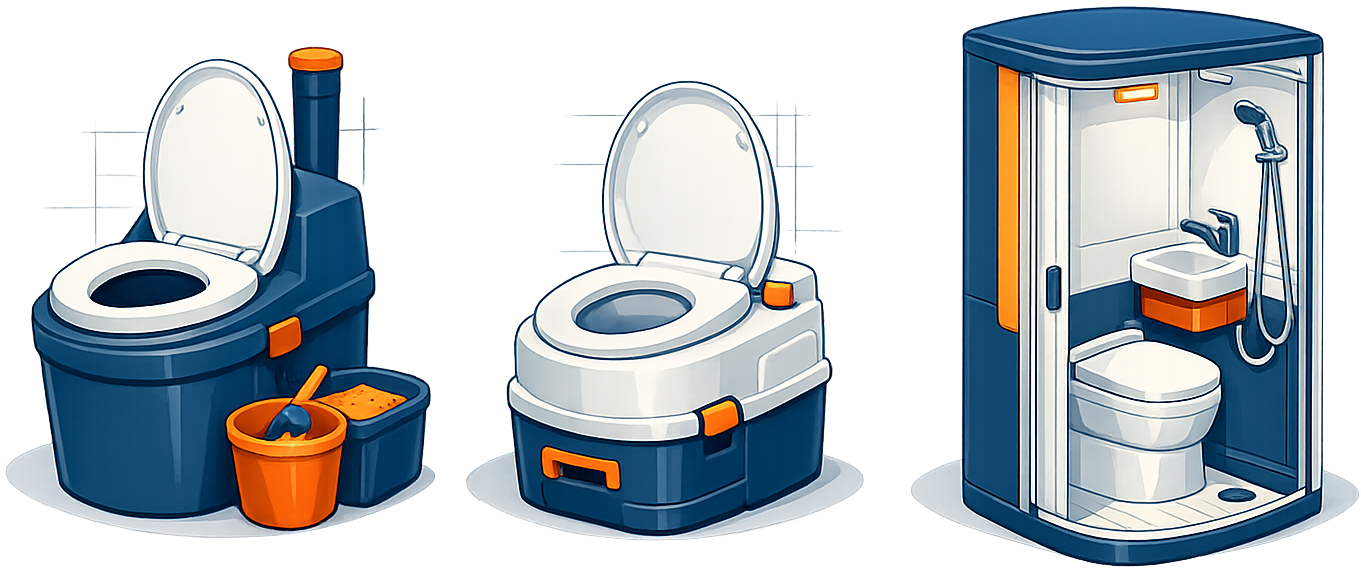
- Portable / cassette toilet. Simple and cheap. A sealed tank you empty at a dump station. The cassette version is built in with an external access door; the portable version is a movable unit.
- Composting (dry separating) toilet. Separates liquids from solids, uses no water, and has no black tank. Empty the liquid bottle often and the solids bin less often. Higher up-front cost, less odor when used correctly.
- None / a simple backup. Some rely on facilities plus an emergency option. Minimalist, but plan for the times nothing is open.
Shower options
- Indoor wet bath. A fully enclosed, waterproof space where the toilet and shower share the room. Maximum comfort, maximum space and moisture cost.
- Outdoor shower. A hose and a hot-water source at the rear or side, often with a pop-up privacy tent. Cheap, space-free, and great in warm weather.
- No dedicated shower. Campgrounds, gyms, rec centers, and the ocean. Common and workable for many travelers.
Wet bath considerations
If you do build an indoor wet bath, plan for it properly:
- Waterproofing. Every surface must handle splashing without leaking into the structure.
- Moisture. Showering indoors dumps humidity into the van; pair it with strong ventilation and dry heat (see insulation & condensation).
- Water use. Indoor showers use more fresh water and fill the gray tank faster; size both accordingly in your water system.
- Hot water. A real shower needs an on-demand heater, adding cost and complexity.
Gray water
Sink and shower runoff is gray water. As covered in the water systems guide, collect it in a gray tank and dump only at approved stations, never on the ground. Strain food scraps and use biodegradable soap to keep the tank from smelling.
Emptying waste responsibly
- Cassette / black tanks empty at RV dump stations and some serviced restrooms, never in a regular trash or storm drain.
- Composting solids go into a sealed bag in the trash where permitted; liquids go down a toilet or approved disposal.
- Be a good guest. Responsible disposal is a big part of why communities stay welcoming to van travelers.
Human waste and gray water must go to proper facilities. Dumping either on the ground is illegal in most places and gives all van travelers a bad name.
If you are unsure, start with a composting or cassette toilet and an outdoor shower. It covers real needs, saves a lot of space and moisture, and you can always add more later.
Common mistakes
- Building a wet bath you rarely use, giving up space for it.
- Ignoring the moisture an indoor shower adds.
- Undersizing the gray tank for shower use.
- No waterproofing plan for the wet bath.
- Improper waste disposal.
Quick checklist
- Decide toilet and shower separately, based on real travel
- Pick a toilet: cassette/portable, composting, or none
- Pick a shower: indoor wet bath, outdoor, or facilities
- If a wet bath: waterproof it, plan ventilation and hot water
- Size fresh and gray tanks for your shower habits
- Dump gray and black only at approved stations